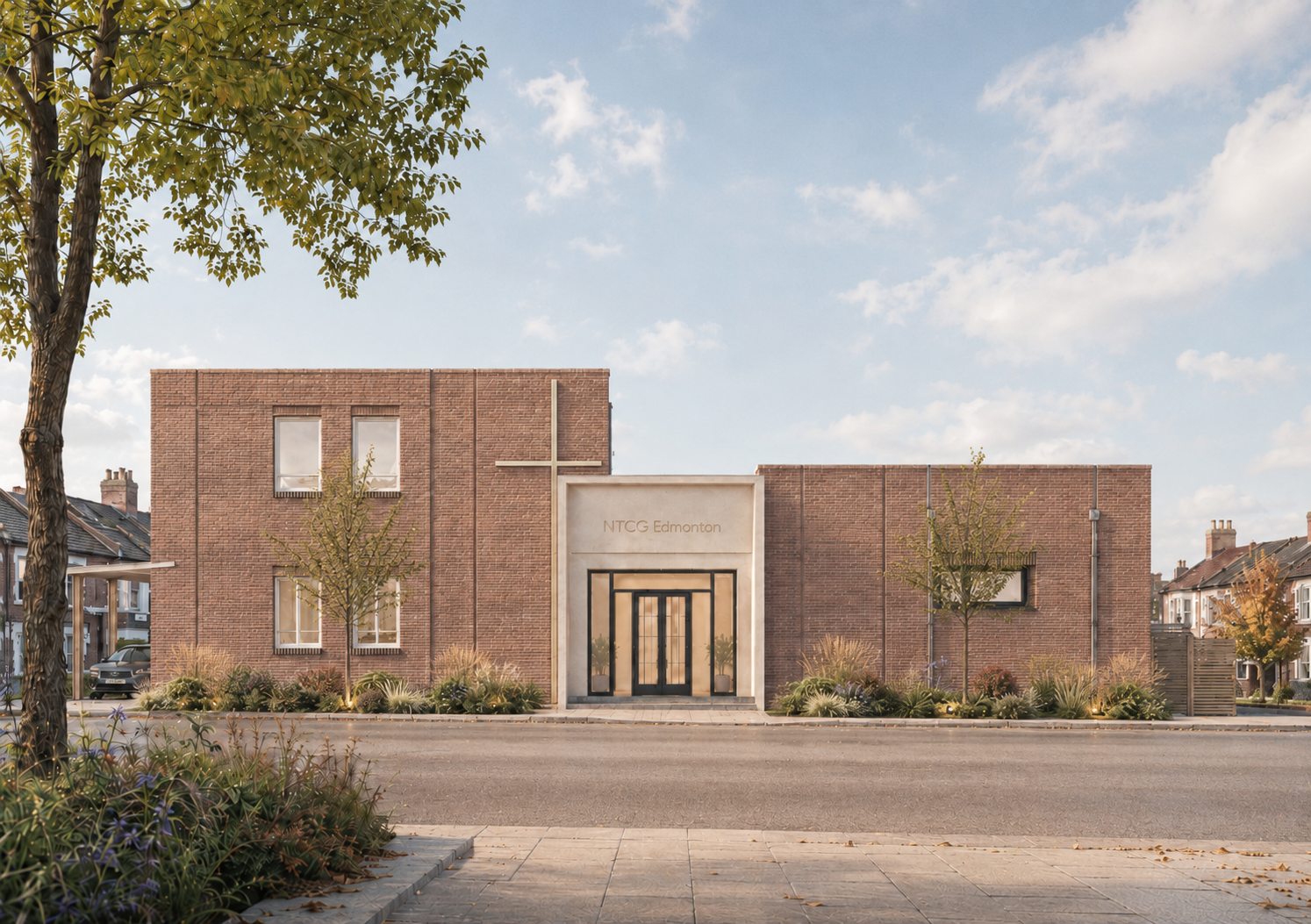
This project exemplifies our studio’s ability to unlock latent value in complex heritage assets while aligning social mission, financial resilience and long-term sustainability. Appointed to reimagine a historic Victorian church in Bethnal Green, our brief was not simply to refurbish, but to transform the building into a fully accessible, income-generating, seven-day-a-week community anchor .
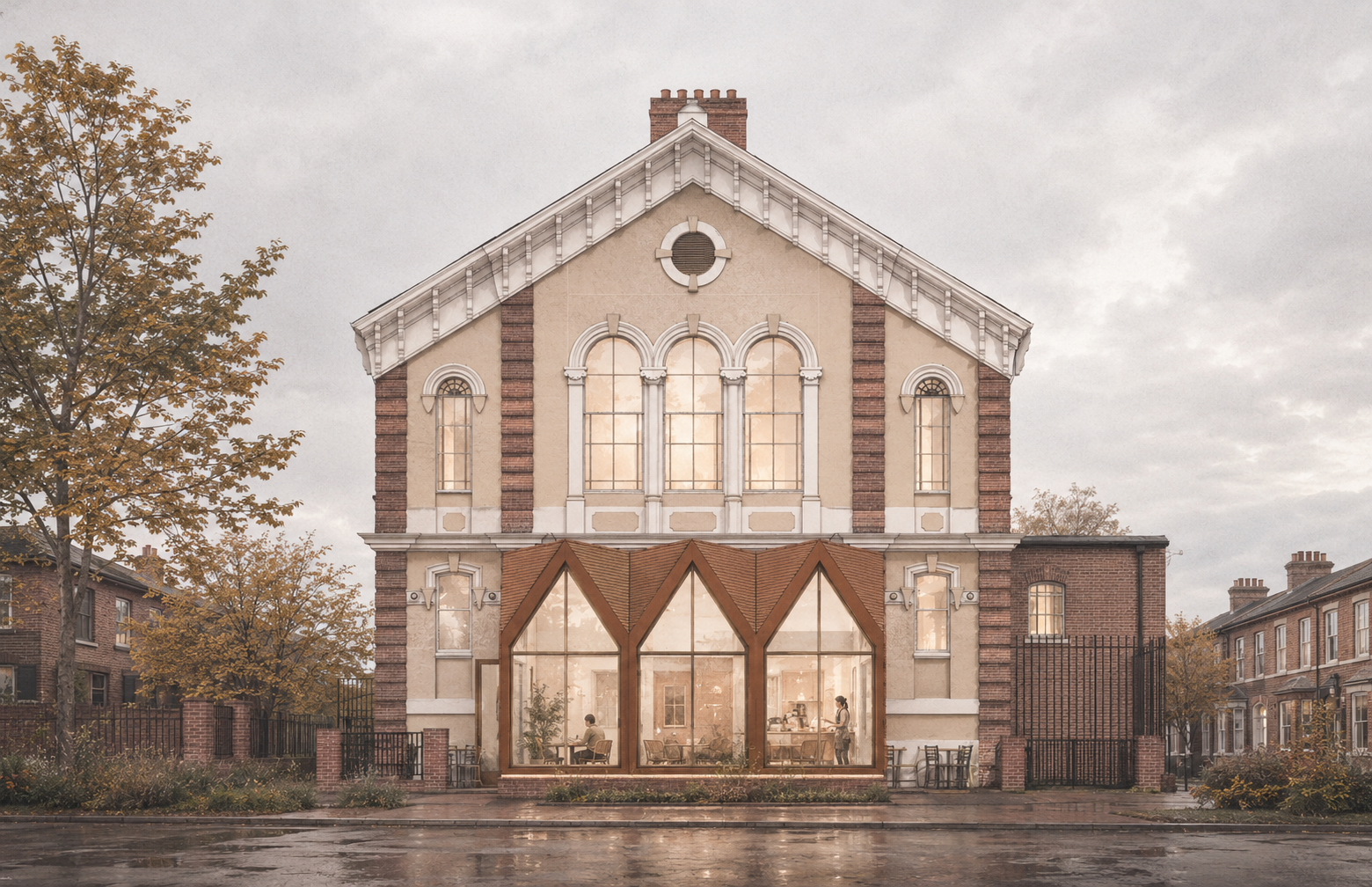
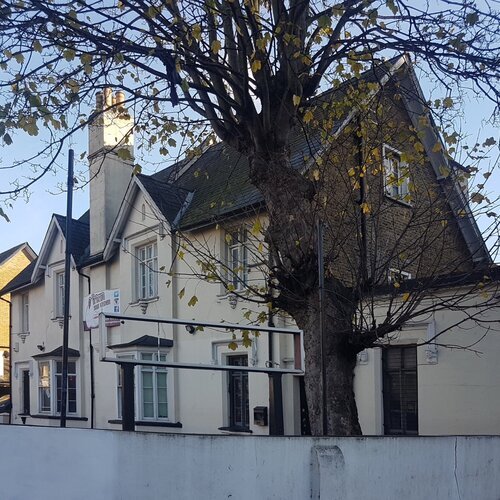
Our first intervention addressed the most critical barrier to use: access. We reconfigured the front elevation to introduce a new, fully accessible street-level entrance, supported by a platform lift providing step-free access to all floors. This single move fundamentally changed how the building engages with the public realm, increasing visibility, legibility and welcome, while meeting modern accessibility standards without compromising heritage value.
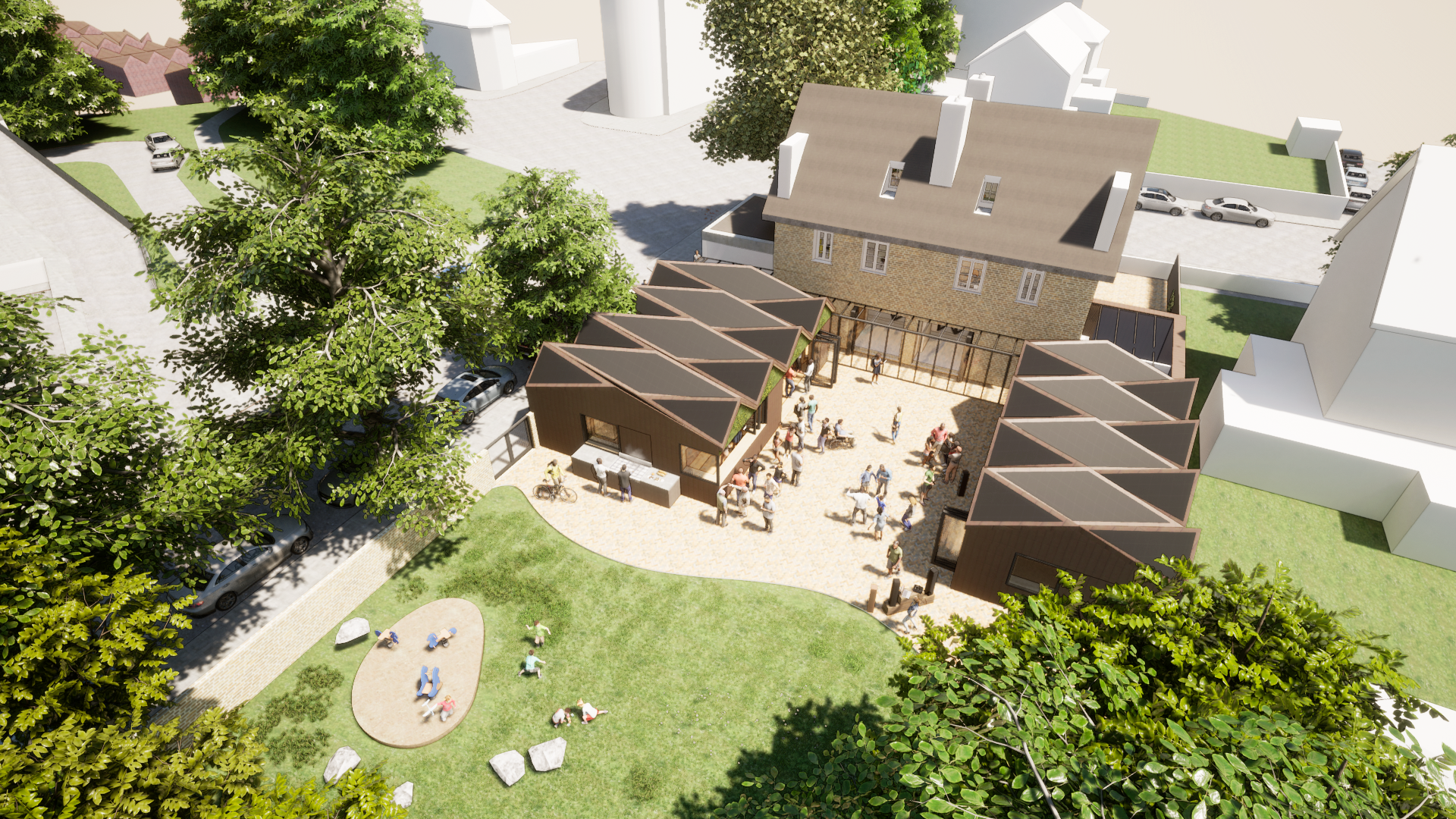
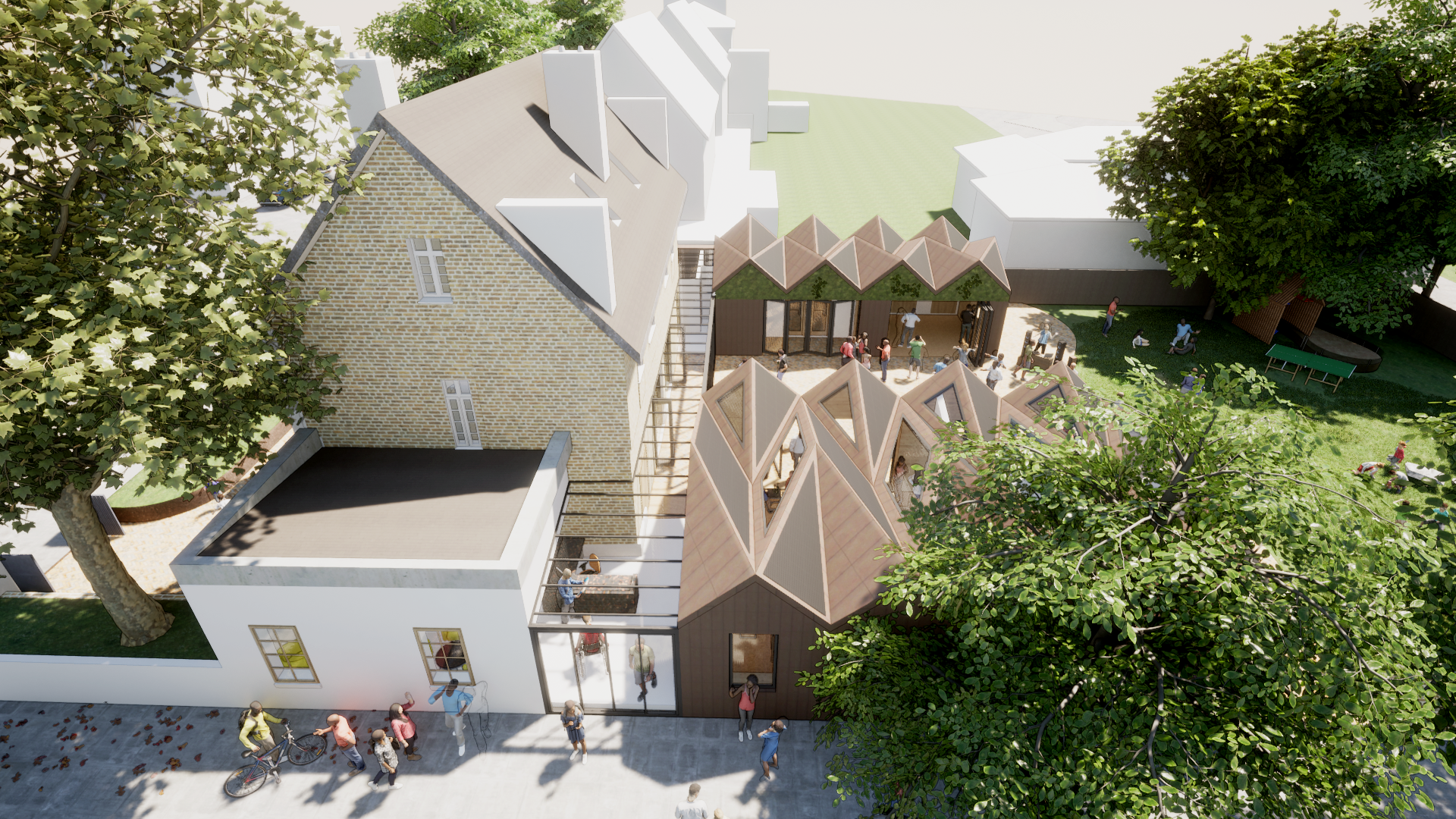
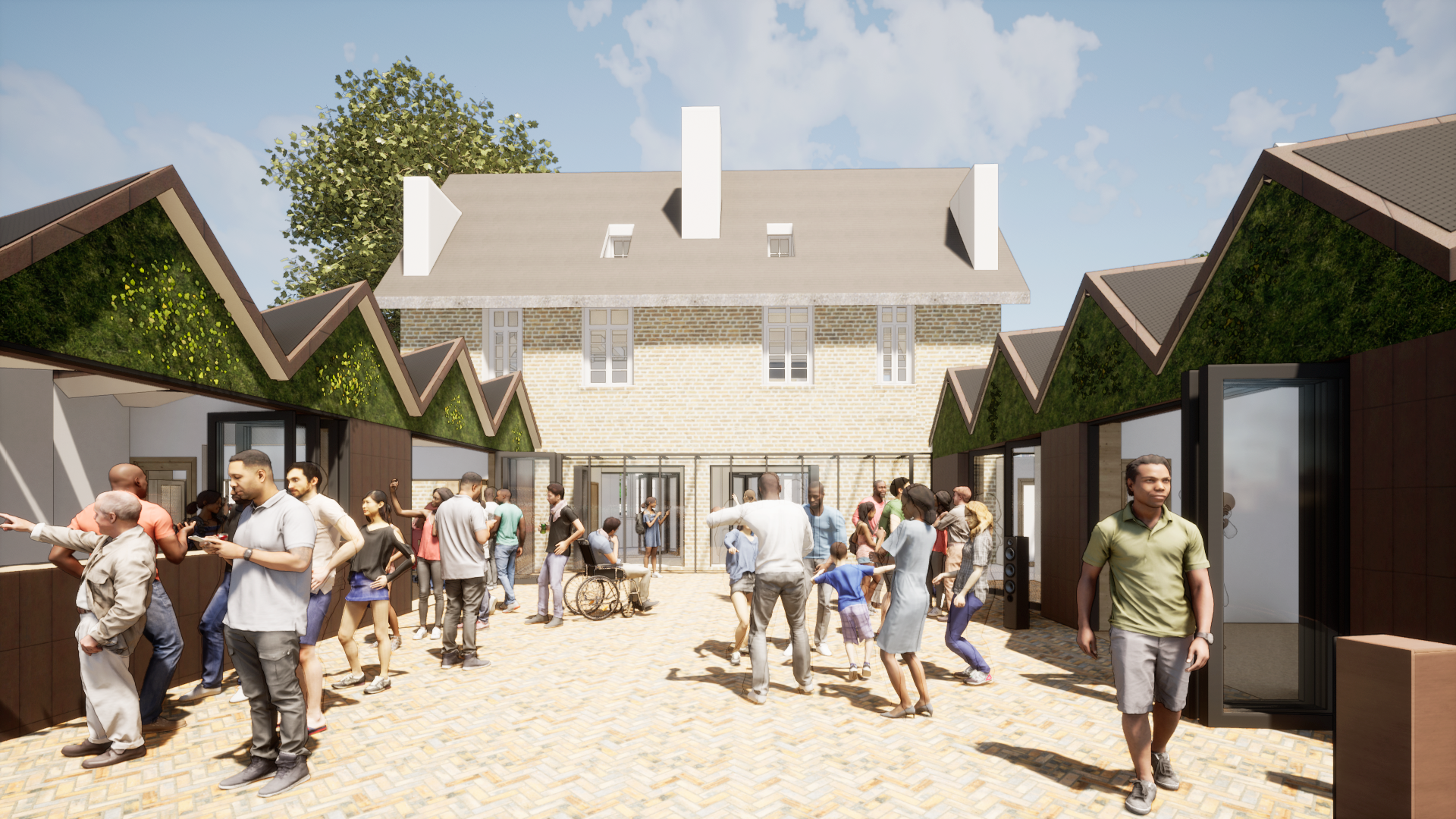
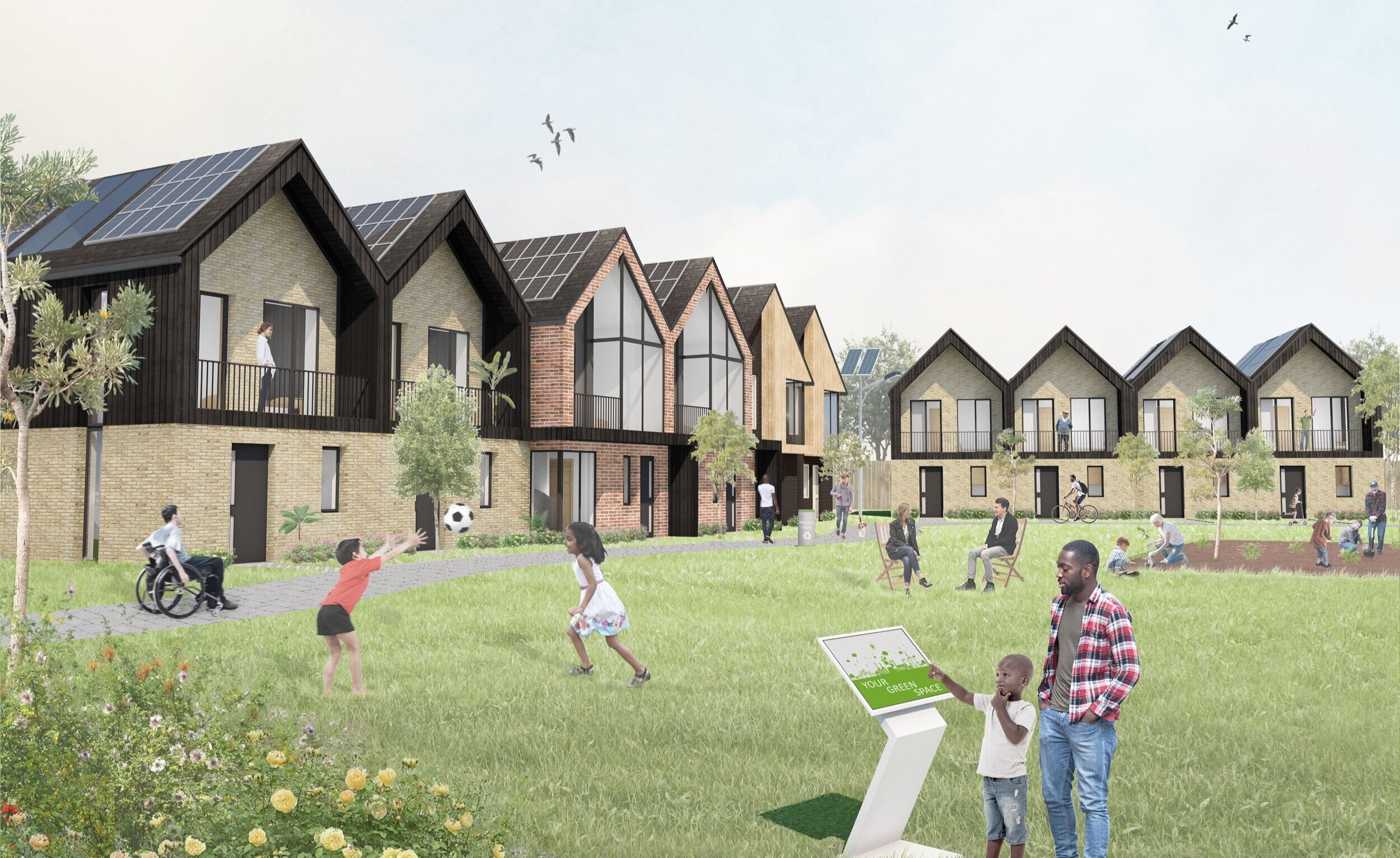
The proposed single-storey timber entrance is conceived not as an appendage, but as a civic threshold: a contemporary narthex that mediates between street and sanctuary, weekday and Sunday, heritage and renewal. The new foyer is articulated as a finely crafted timber pavilion set forward of the historic church façade. Its geometry is calm yet expressive: a sequence of pitched forms that echo the rhythm and hierarchy of the host building’s roofscape, abstracted and reinterpreted at a domestic, human scale. The structure reads as light, porous and deliberately legible, with expressed timber framing and generous areas of glazing that dissolve the boundary between inside and out.
The timber screens introduce depth and texture to the street elevation. They modulate light, filter views, and create a layered façade that changes character across the day. In sunlight, the foyer glows; in the evening, it becomes a lantern—an inhabited threshold rather than a closed door. The material palette is restrained and purposeful: warm timber against masonry, transparency against solidity, contemporary detail set respectfully against historic fabric.
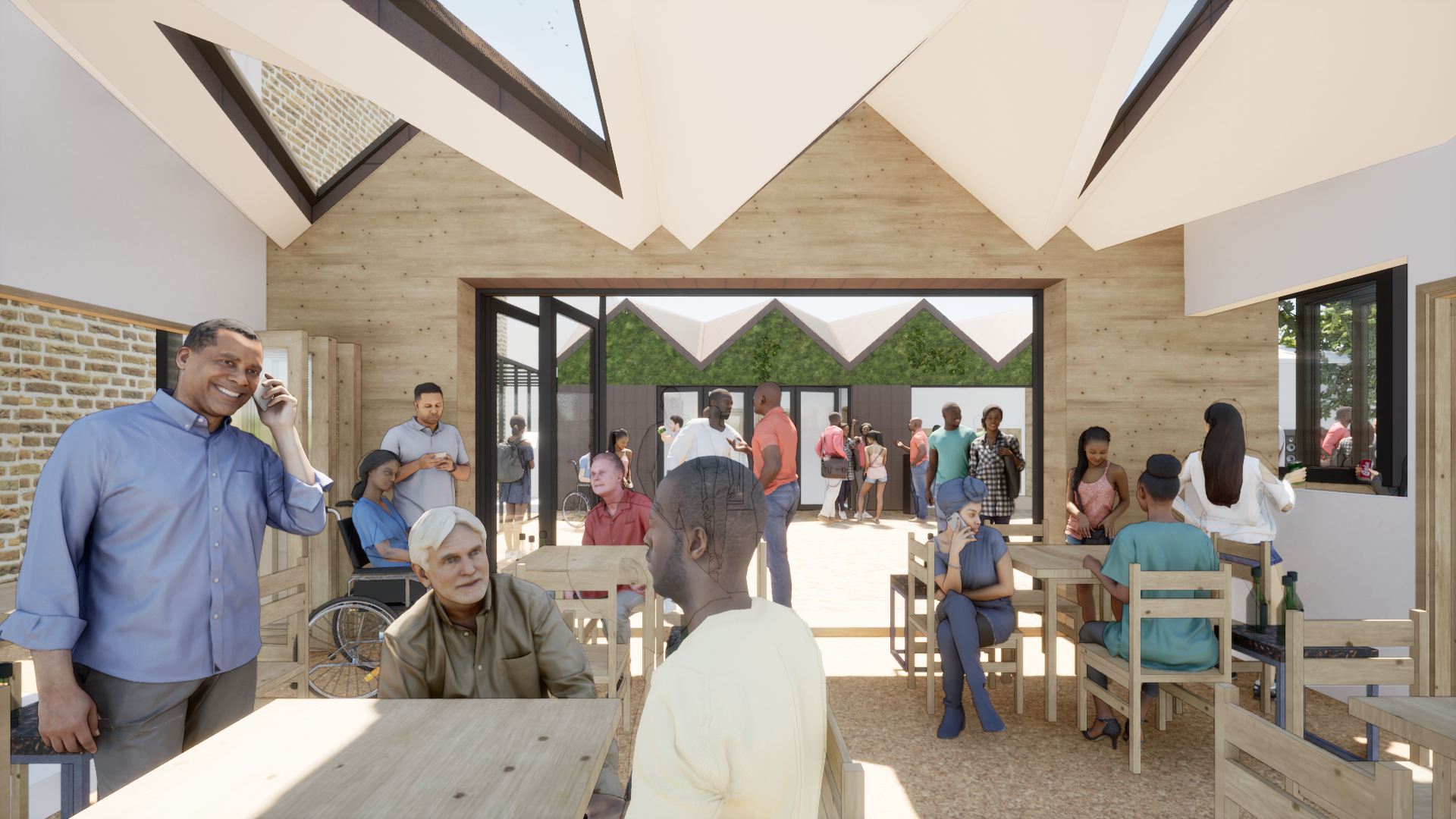
Functionally, the entrance is highly adaptable. On Sundays, it operates as a generous church foyer—an intermediate space for gathering, welcome, and informal congregation before and after worship. During the week, the same volume transforms seamlessly into a café and community space, activating the building beyond its traditional liturgical hours. This duality is not incidental; it is embedded in the architecture itself. The openness, transparency and street address make the space inviting and non-exclusive, while its proportions and alignment maintain a clear relationship to the sacred spaces beyond.
This adaptability directly supports the long-term resilience of the church, both socially and economically, aligning with contemporary models of faith buildings as multi-use civic assets rather than single-purpose enclosures.
At an urban scale, the entrance acts as a beacon on the street. Its transparency and occupation signal openness and activity, countering the tendency of historic religious buildings to appear closed or inward-facing during the week. The café use animates the pavement edge, encouraging passive surveillance, social interaction and a sense of everyday belonging.
In the evening, the timber structure becomes luminous—a warm, human-scaled presence that softens the street and provides a visual anchor within the wider urban fabric. It communicates welcome without signage, values without words.
What makes the intervention particularly successful is its deference without subservience. The historic church remains dominant: its massing, verticality and masonry expression are untouched and clearly legible. The new entrance deliberately sits lower, lighter, and more permeable, allowing the original façade to remain visually and symbolically primary.
Rather than mimic historic detailing, the foyer establishes dialogue through proportion, rhythm and alignment. The pitched forms reference the church roofline; the vertical timber elements resonate with the cadence of existing fenestration. This is a relationship built on architectural intelligence rather than pastiche. The contrast between old and new is honest and legible, reinforcing the significance of both.
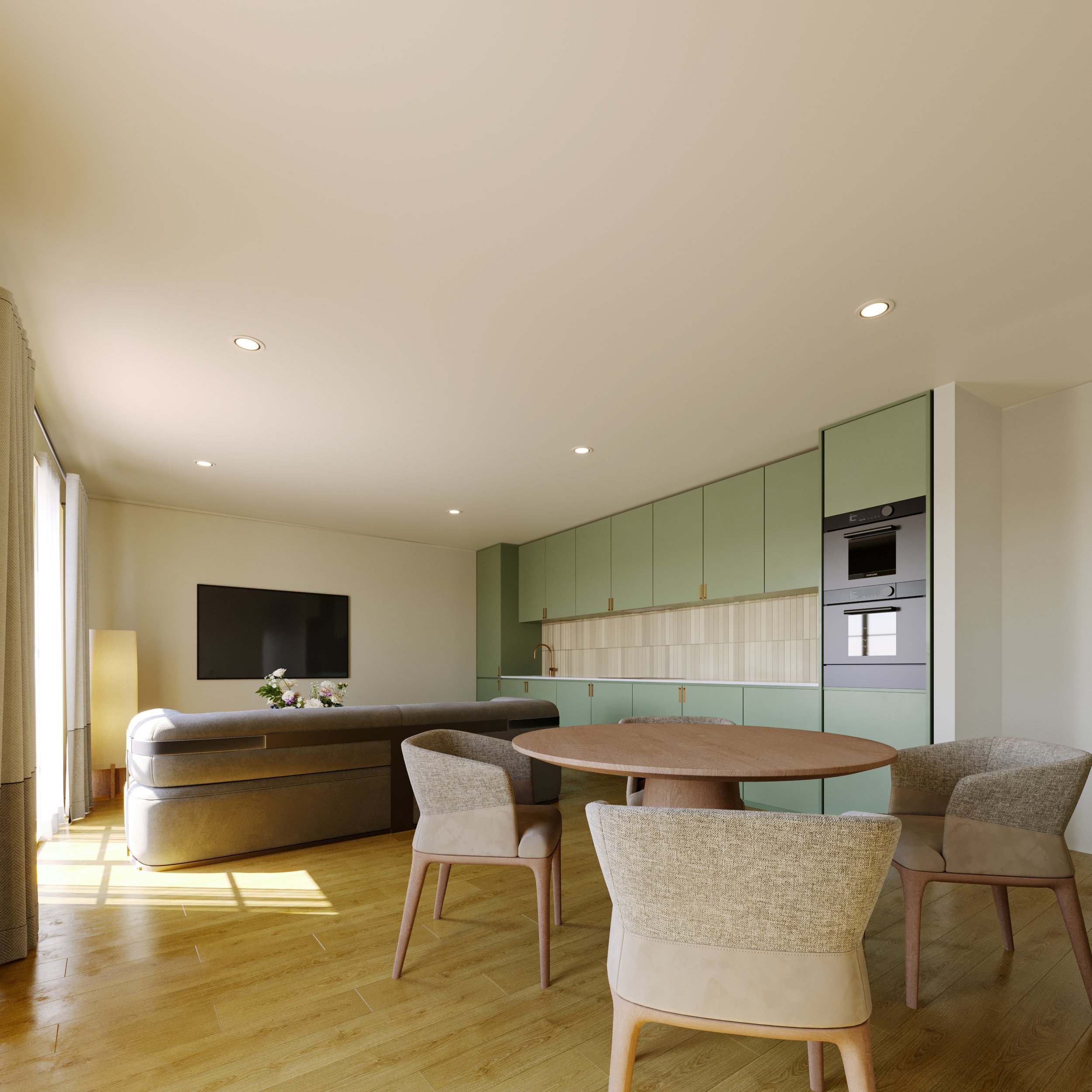
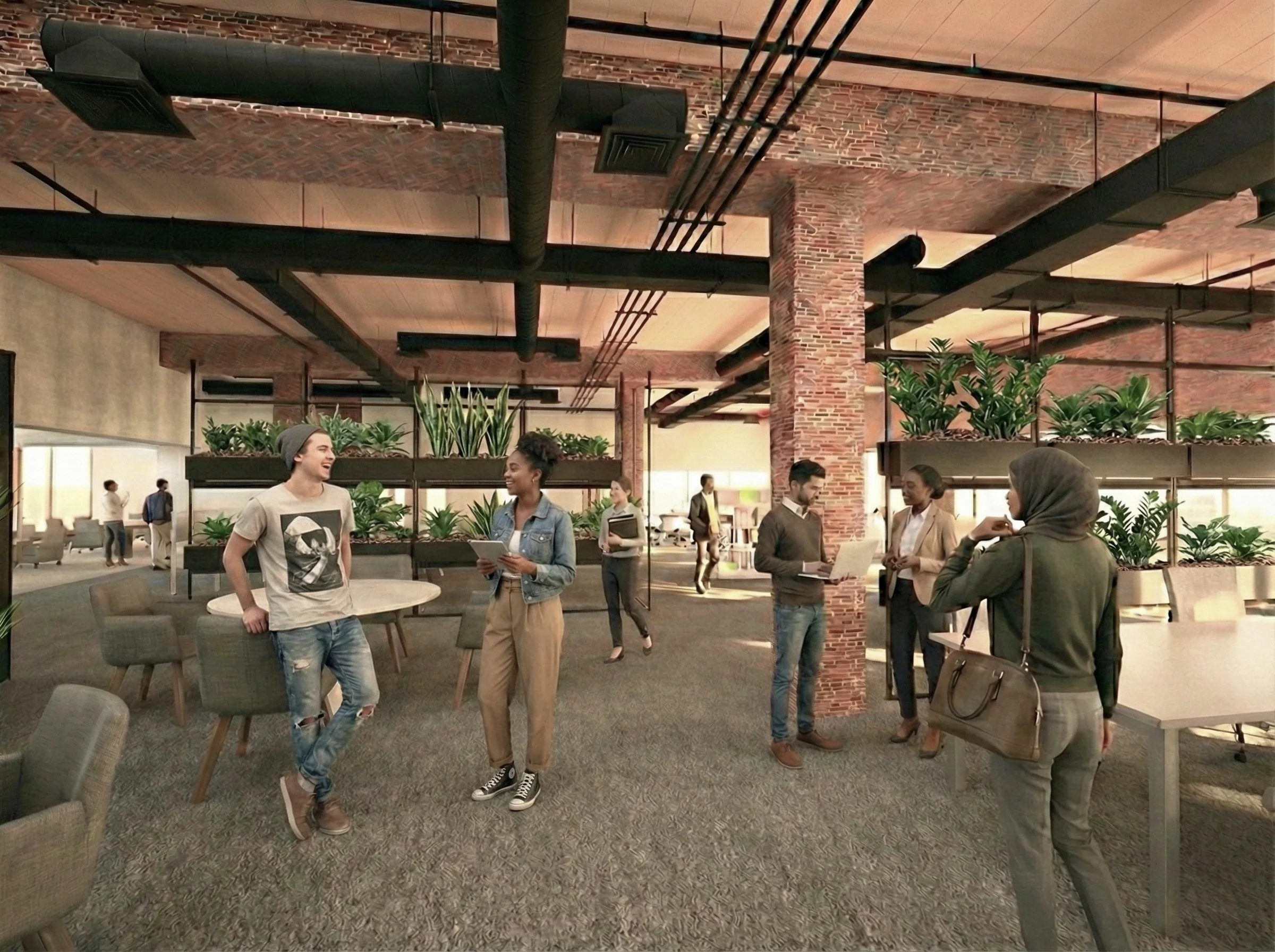
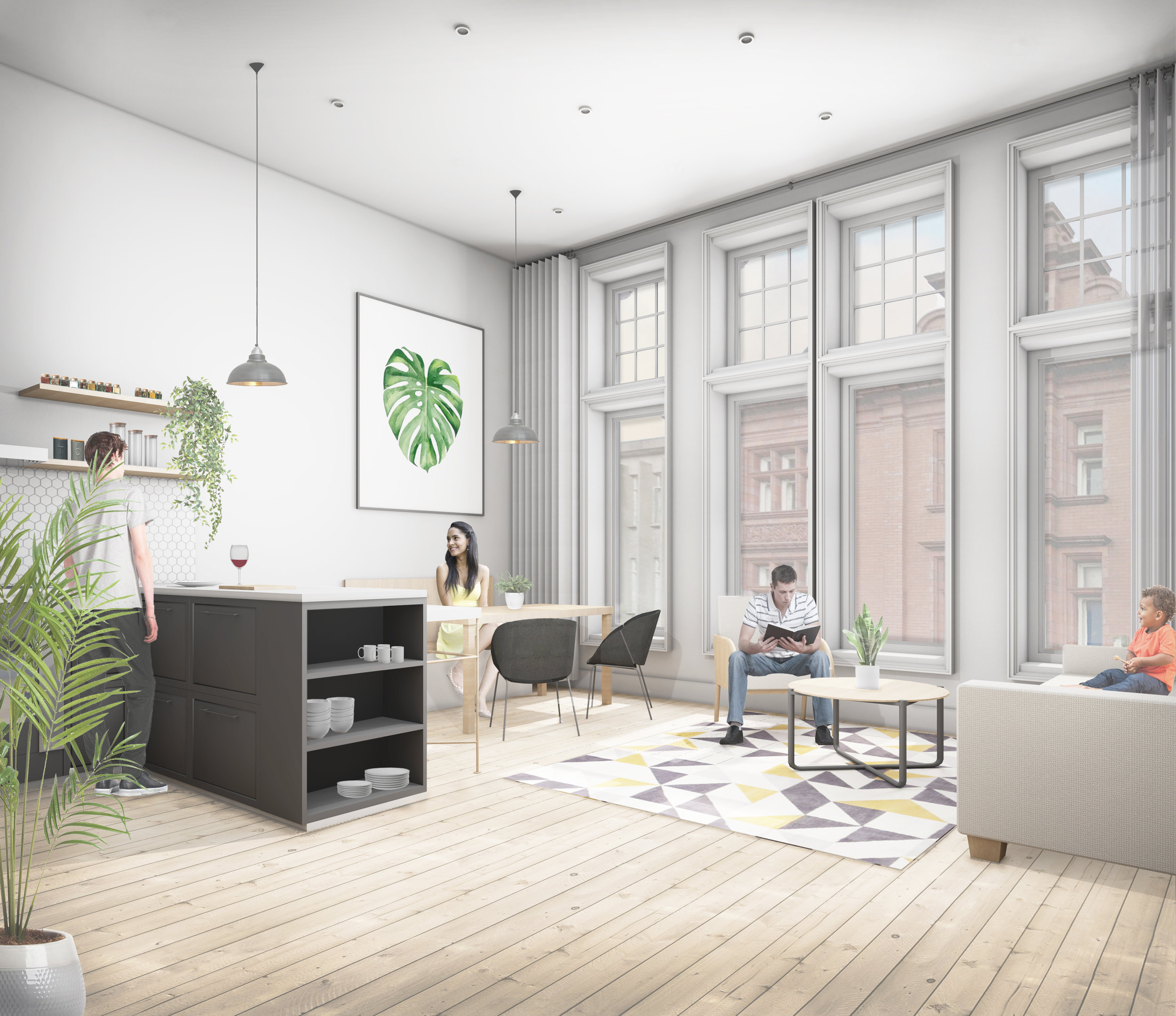
Internally, we delivered a highly efficient reorganisation of space. Underutilised areas were repurposed to support a 70m² community café with active street frontage, flexible worship and event spaces, and new co-working facilities. These interventions were strategically designed to generate diversified revenue streams, enabling the church to cross-subsidise its community programmes and reduce long-term operational risk.
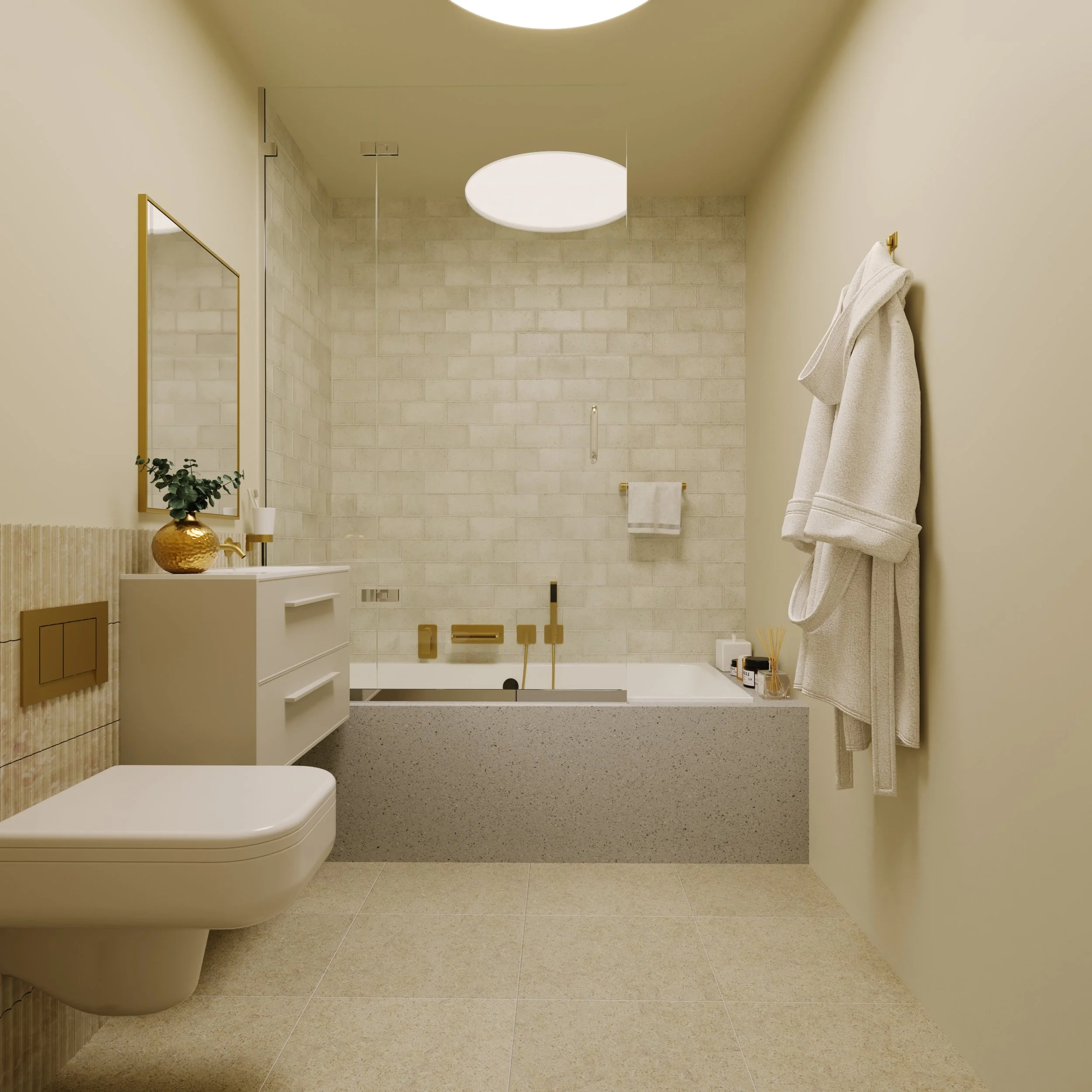
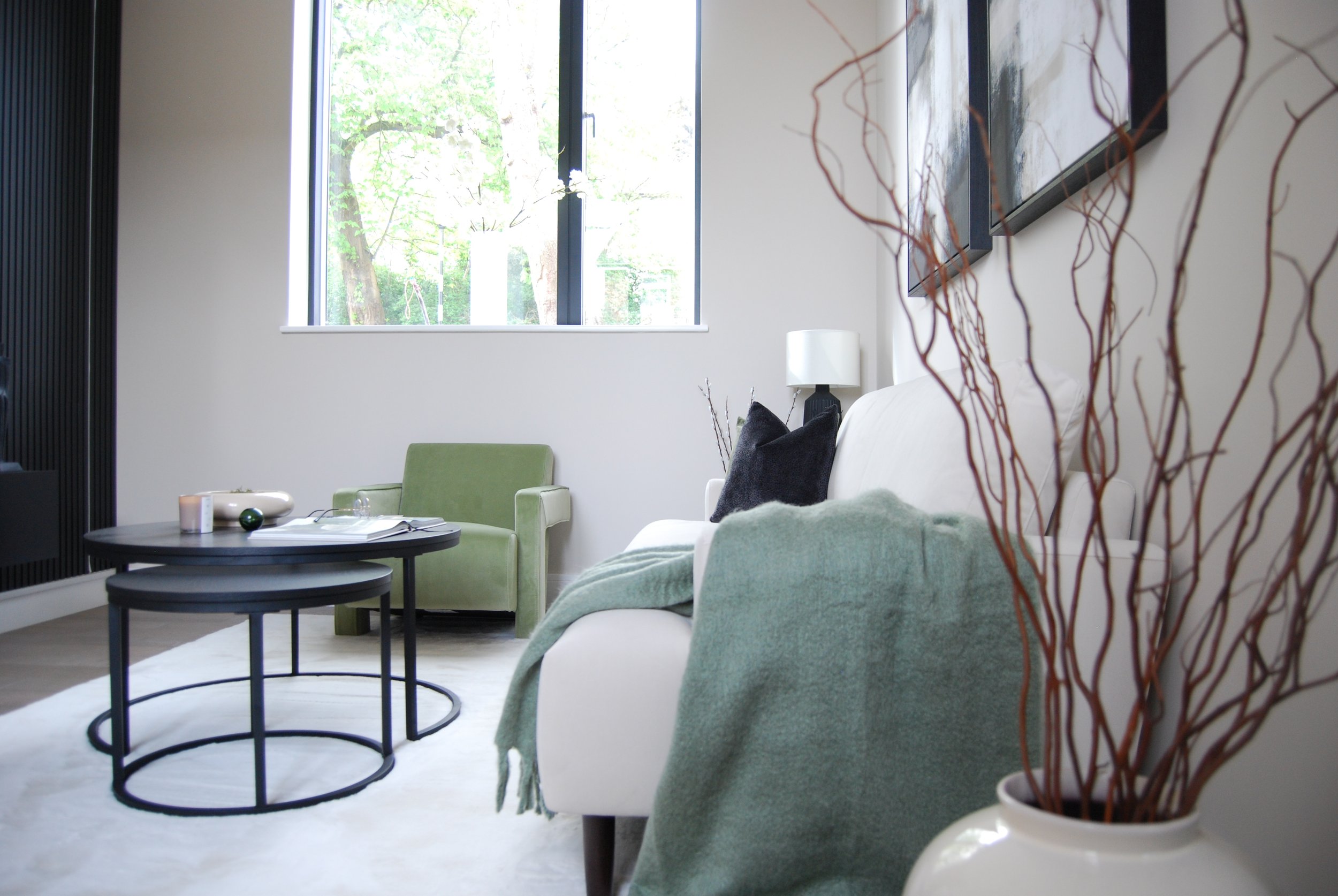
Flexibility was embedded at every scale. The sanctuary was designed to support both worship and weekday co-working through adaptable layouts and retractable partitions, while upper levels previously used for storage are transformed into productive workspace responding directly to local demand - including accommodating artists studio space. Improved WC provision, including accessible facilities on all floors and a shower to support night shelter use, ensures the building serves a wide demographic with dignity.
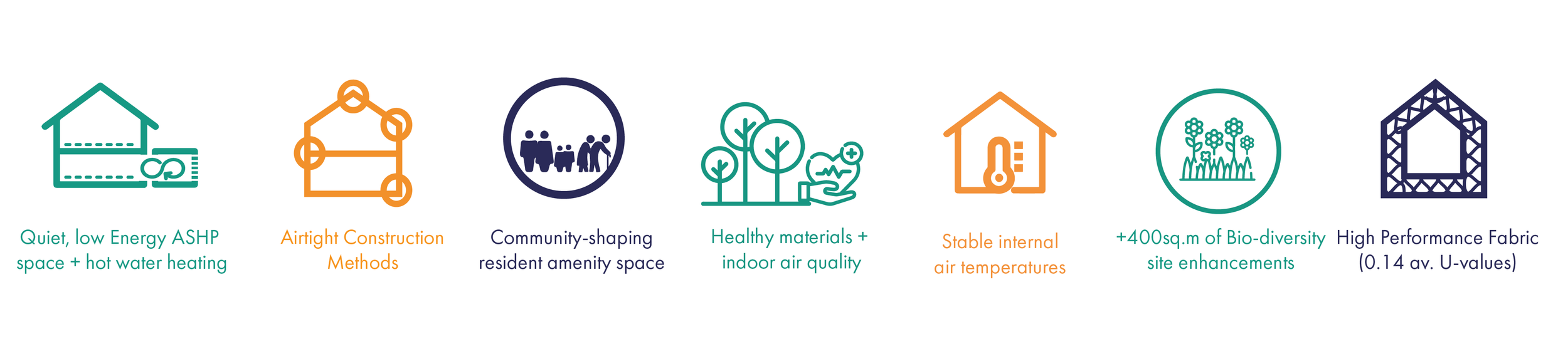
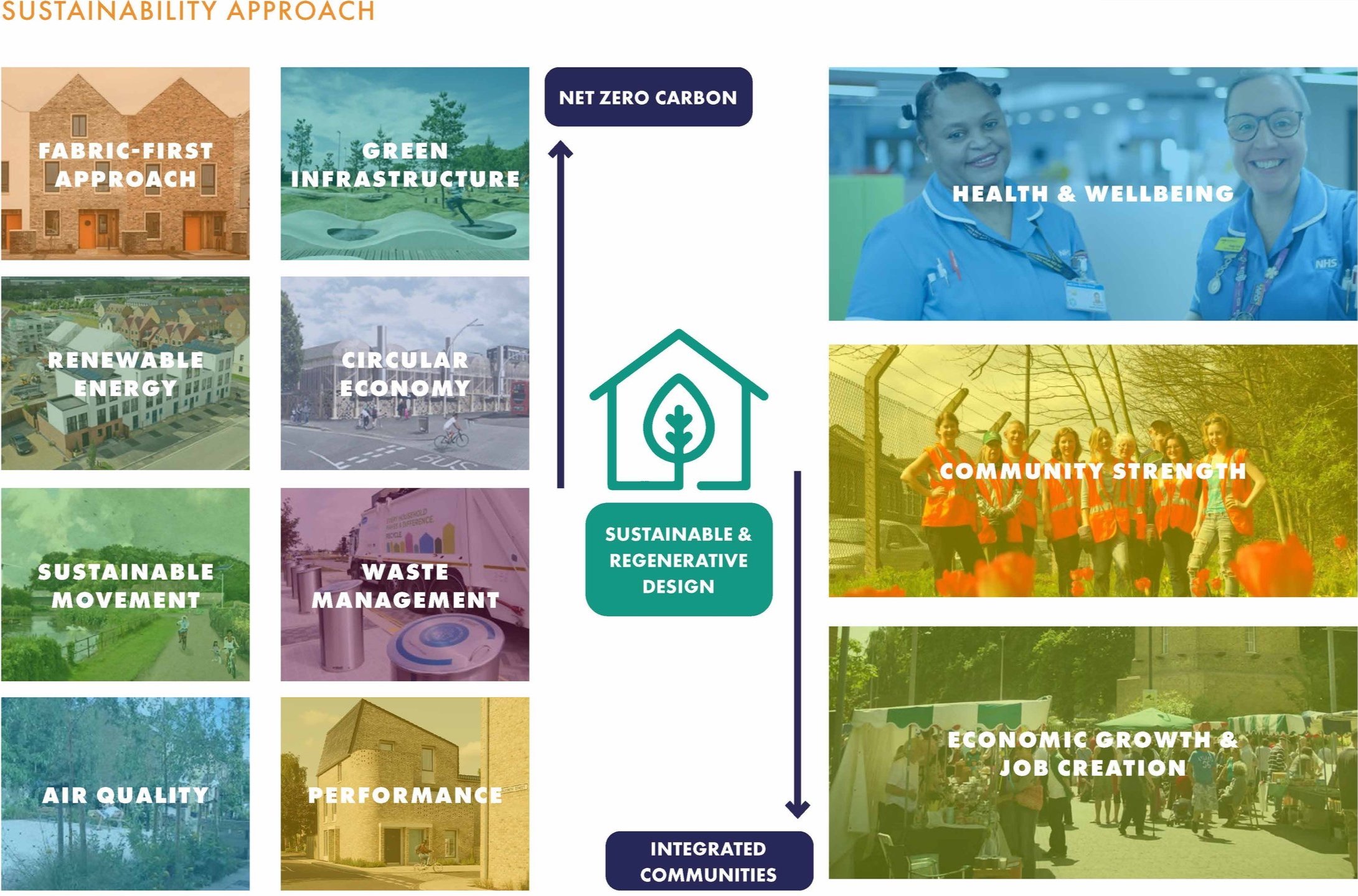
Sustainability underpinned the entire strategy. By prioritising reuse of the existing fabric, limiting demolition, and adopting passive design principles, we significantly reduced embodied carbon while future-proofing the building for low-energy operation.
The result is a clear, data-driven design response that enhances social value, strengthens financial viability, and positions Victoria Park Baptist Church as a resilient civic asset and a beacon of light in the community. This project demonstrates how we deliver architecture that is inclusive, commercially astute and purpose-driven.
This design is special because it understands architecture as both social infrastructure and spatial narrative. It does not rely on grand gestures, but on precision: in scale, materiality, and use. The foyer is simultaneously modest and transformative. It reframes how the church is encountered, extending its mission into daily life while strengthening its role as a community landmark.
In sustainability terms, the use of timber, the passive daylighting strategy, and the emphasis on re-use and adaptation rather than wholesale redevelopment position the project firmly within a low-carbon, future-facing ethos—one that respects embodied energy while adding long-term value.
In summary, the entrance is not merely a doorway; it is a threshold of meaning. It is architecture that welcomes, reveals and activates—a contemporary civic room that allows the church to remain rooted in its heritage while projecting relevance, warmth and light onto the street scene.