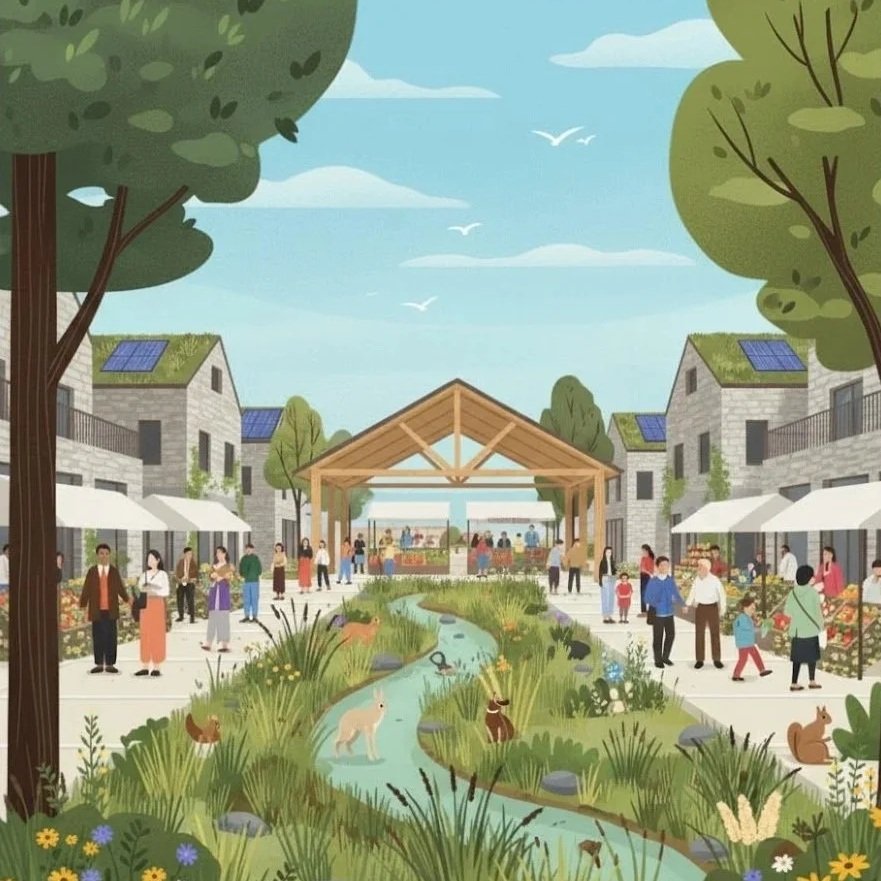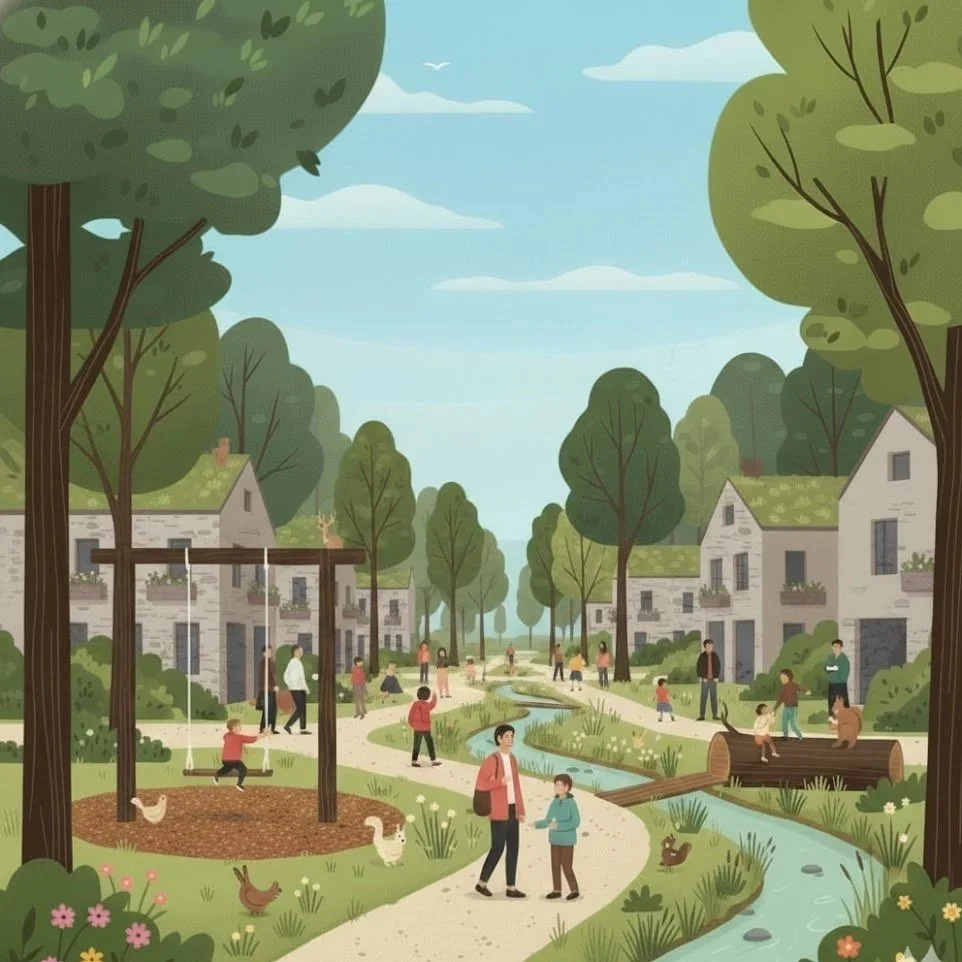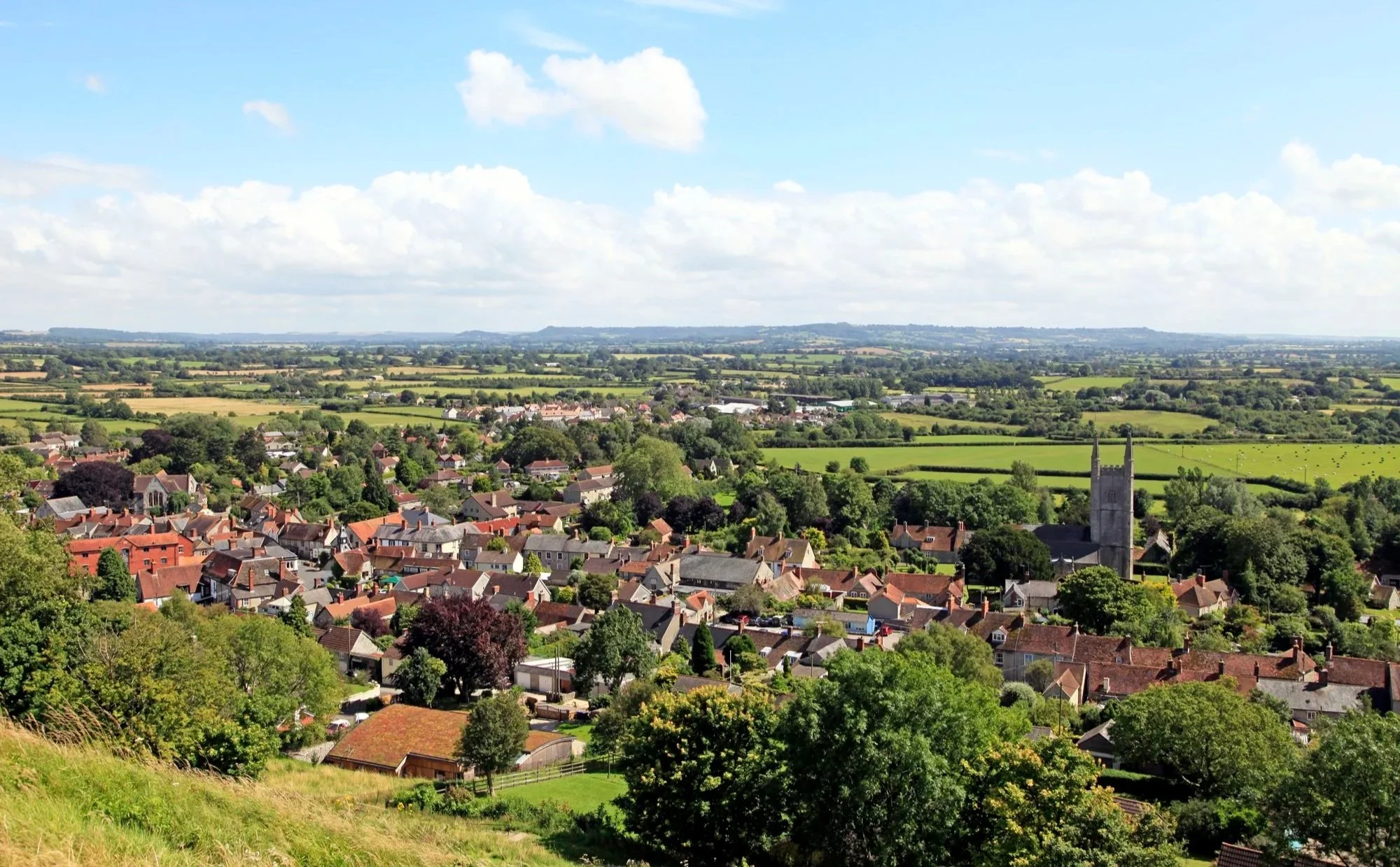
Photo credit: Time for Wiltshire
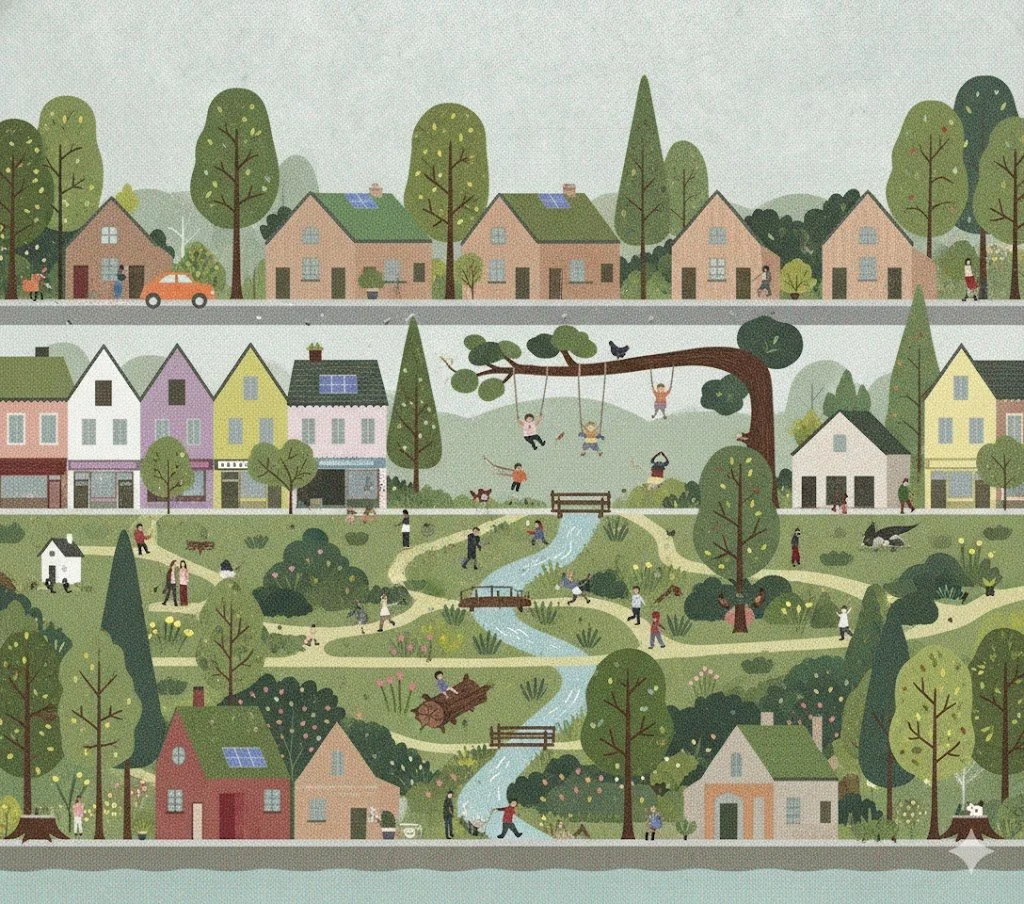
Extending a market town in Wiltshire – A Regenerative Neighbourhood
Gbolade Design Studio (GDS) have been appointed to develop a strategic vision and regenerative masterplan for a sensitive 6-hectare site on the edge of the historic market town of in Wiltshire. The project demonstrates how design-led, data-informed placemaking can unlock significant social, environmental and commercial value for residential developers while responding credibly to local context and policy drivers .
From the outset, GDS framed the project around a clear people, place, planet methodology. This enabled the masterplan to move beyond a conventional housing-led scheme and instead propose a genuinely regenerative neighbourhood by increasing the site’s density to reach 150 homes, supported by a new health surgery and substantial public infrastructure. Crucially for deliverability, the proposal aligns housing numbers, tenure mix and community facilities with evidenced local need, drawing on local Census socio-economic data.
One of the project’s most tangible value-adding moves is the allocation of approximately 30% of the site as Public Open Space in the form of a new Wildlife Corridor - a dedicated and integrated green & blue infrastructure asset that extends the European migratory route of locally found birds such as lapwings. Rather than residual land, this is structured as a continuous east–west green spine forming a multifunctional wild corridor, integrating active travel, sustainable drainage systems (suds), play, active travel and biodiversity enhancement. This approach also mitigates ecological constraints identified on site—species-rich hedgerows, bat foraging routes and dormouse habitats—while strengthening planning resilience and long-term place value.
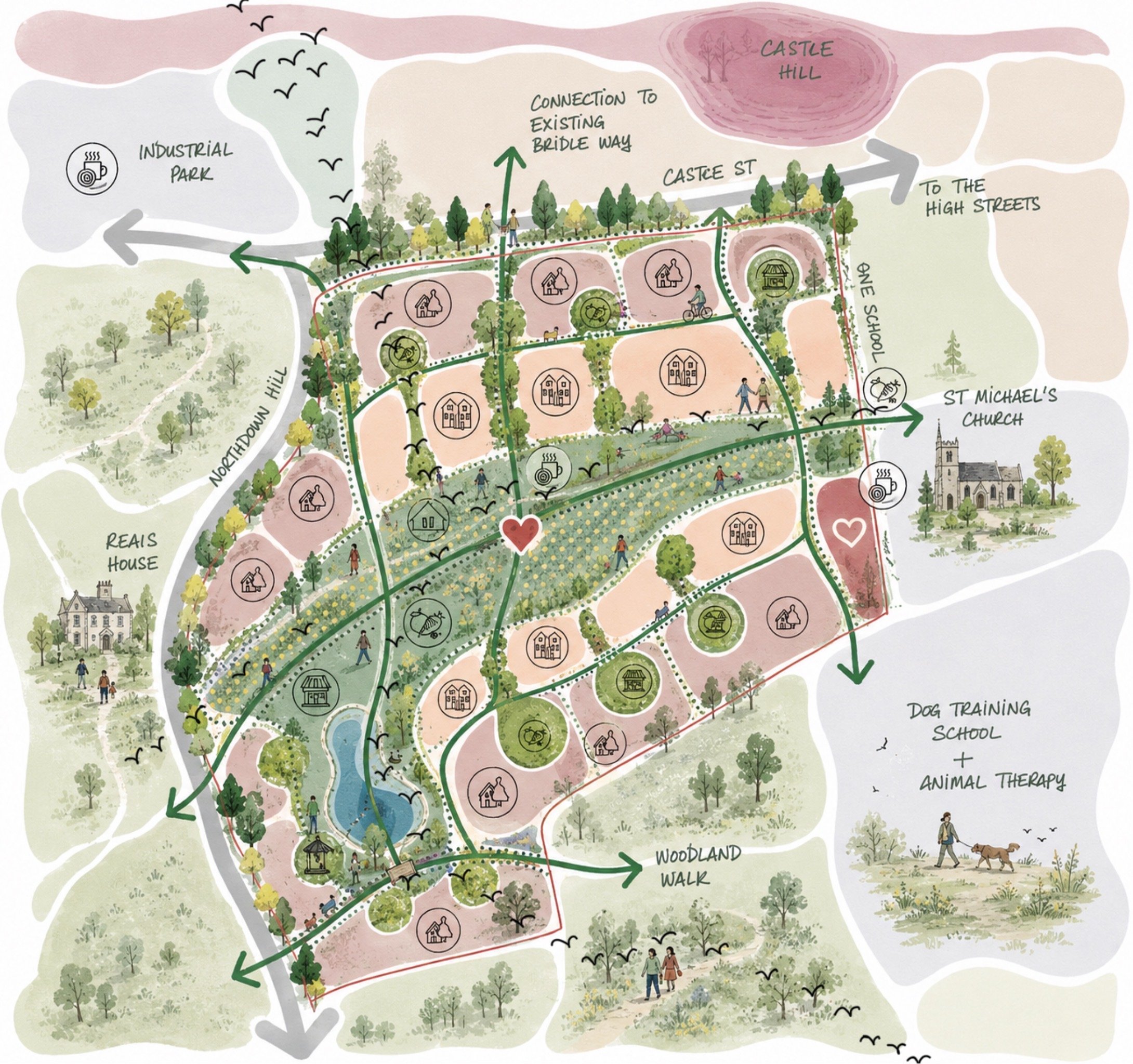
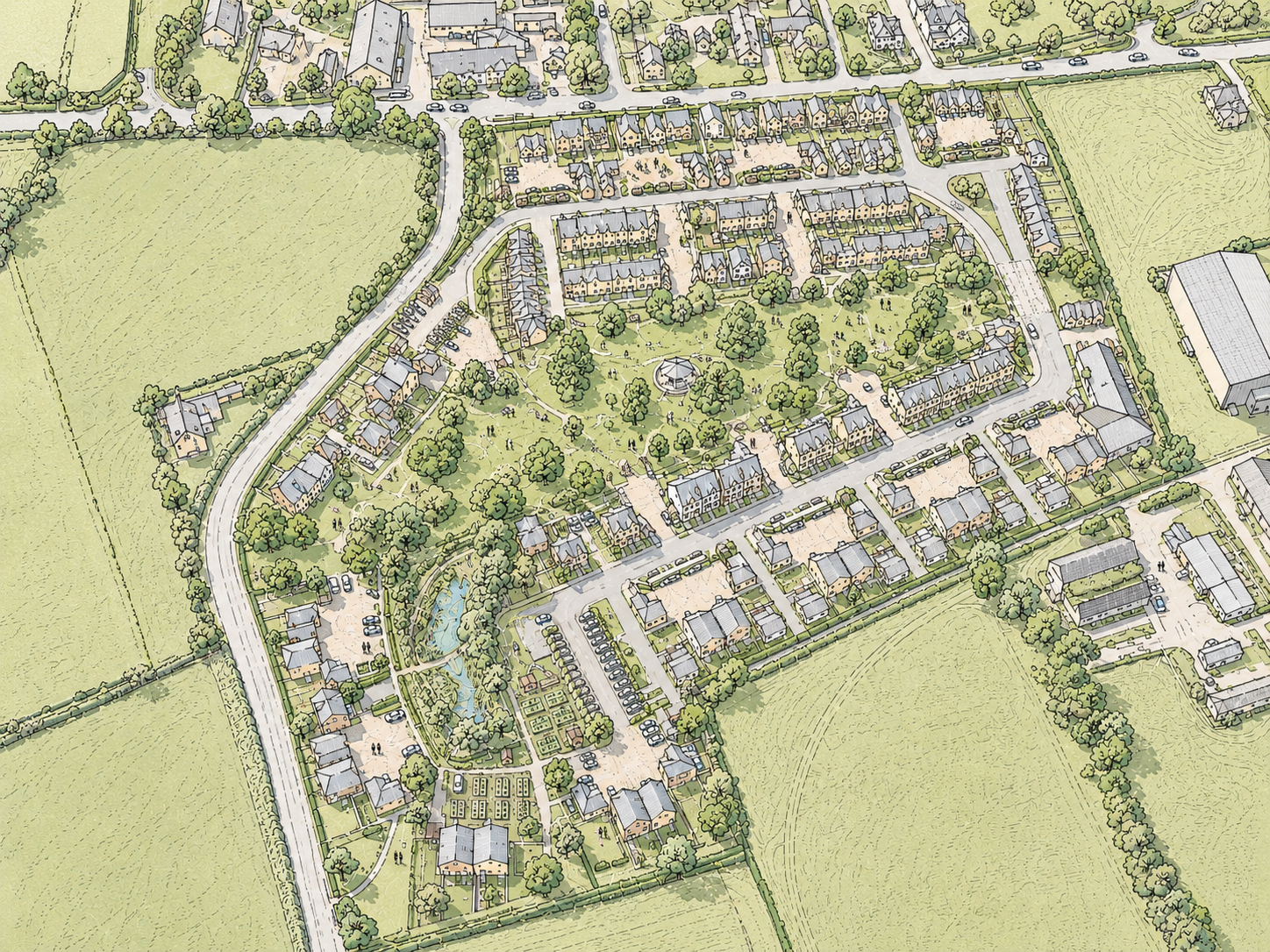
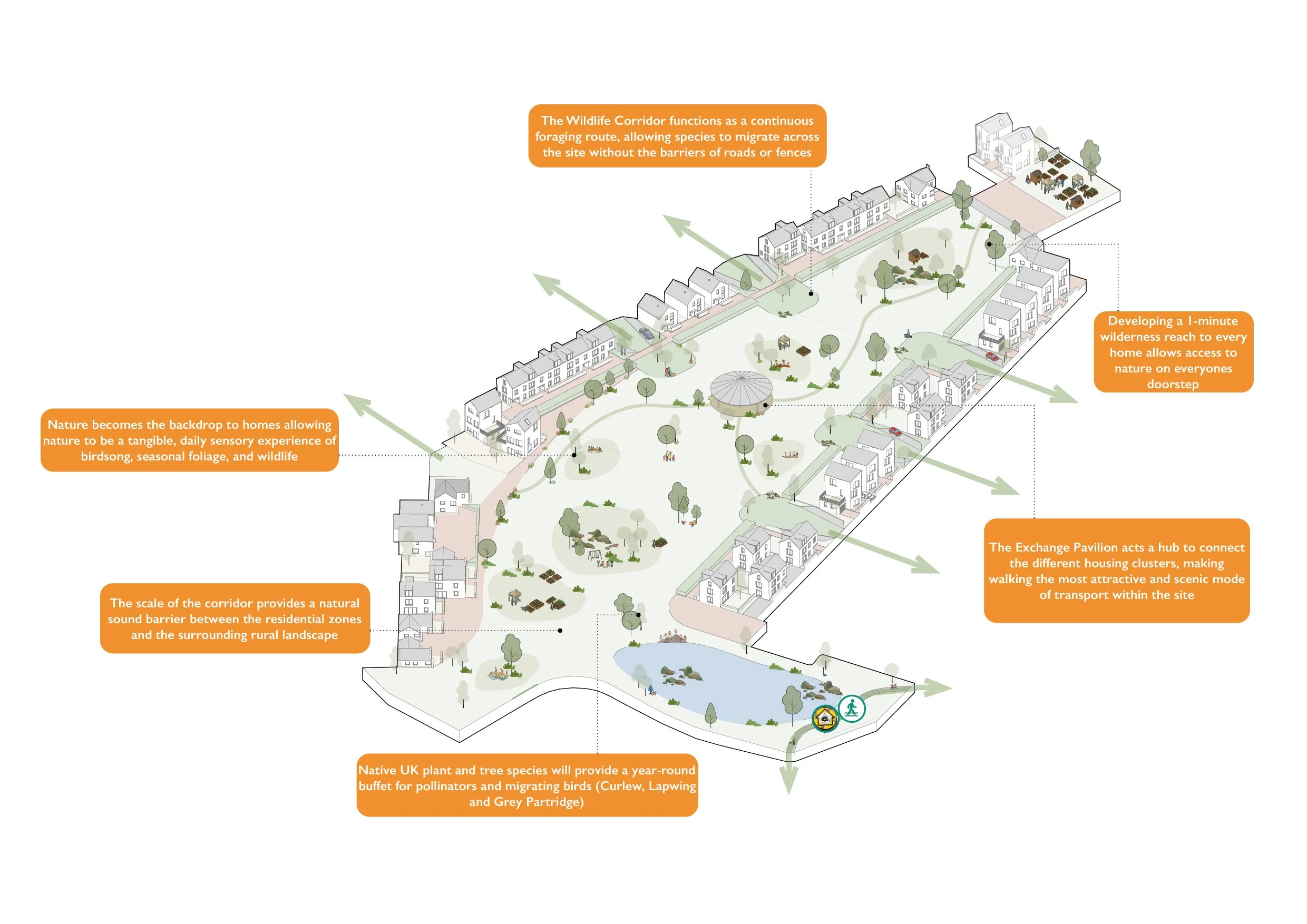
The Wildlife Corridor supporting migratory birds
GDS also introduced a differentiated typological strategy, including ‘Compound Housing’, to address key challenges such as loneliness, serendipitous connections, neighbourliness, safety in the public realm, affordability and density transitions at the rural edge. This allows developers to broaden market appeal, respond to a range of household sizes and future-proof the scheme against changing housing demand, without compromising character or sales values.
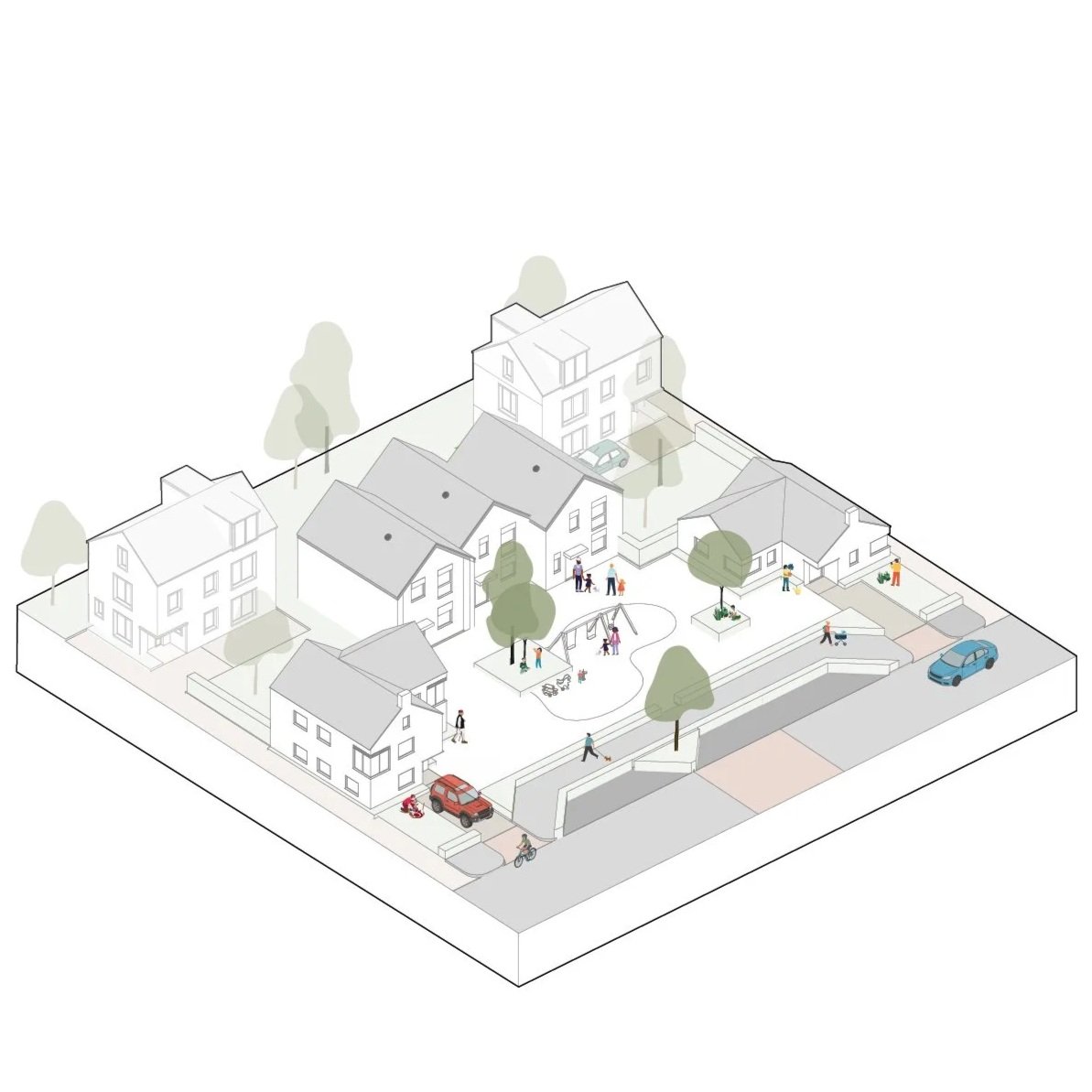
Compound Housing addressing loneliness & connection
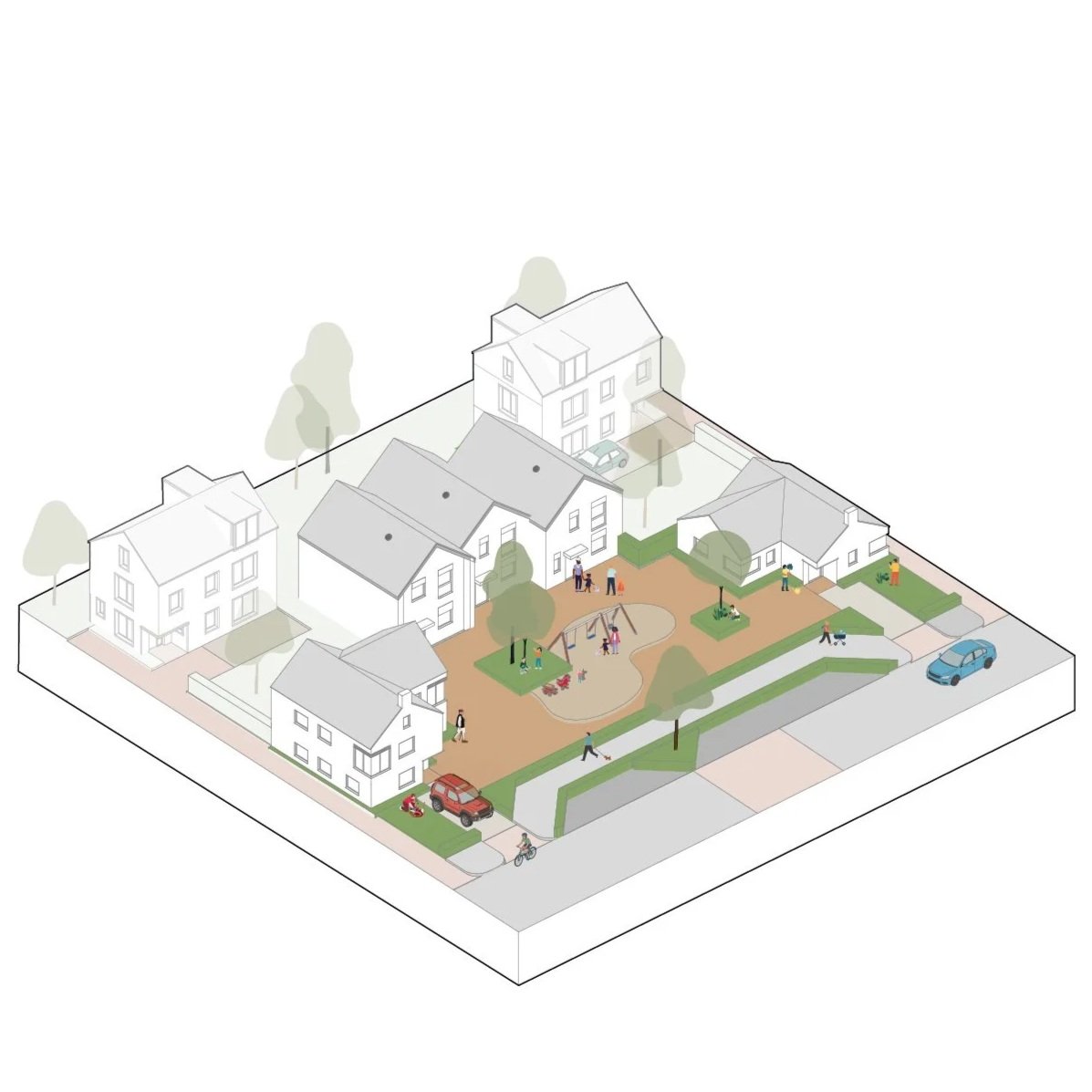
Movement and health outcomes are equally prioritised. Car-lite streets, doorstep play, and edible landscapes in the form of ‘Edible Streets’ that include fruit trees and herb gardens, all with direct connections to existing pedestrian paths and the wider Wiltshire green infrastructure. These character areas embed active travel and wellbeing into the masterplan by default, with residents choosing active travel and interaction with neighbours as their baseline for a thriving life. Evidence consistently shows that access to high-quality green space can increase residential values by 5–20% while reducing long-term infrastructure and health costs—benefits directly captured through our spatial strategy.
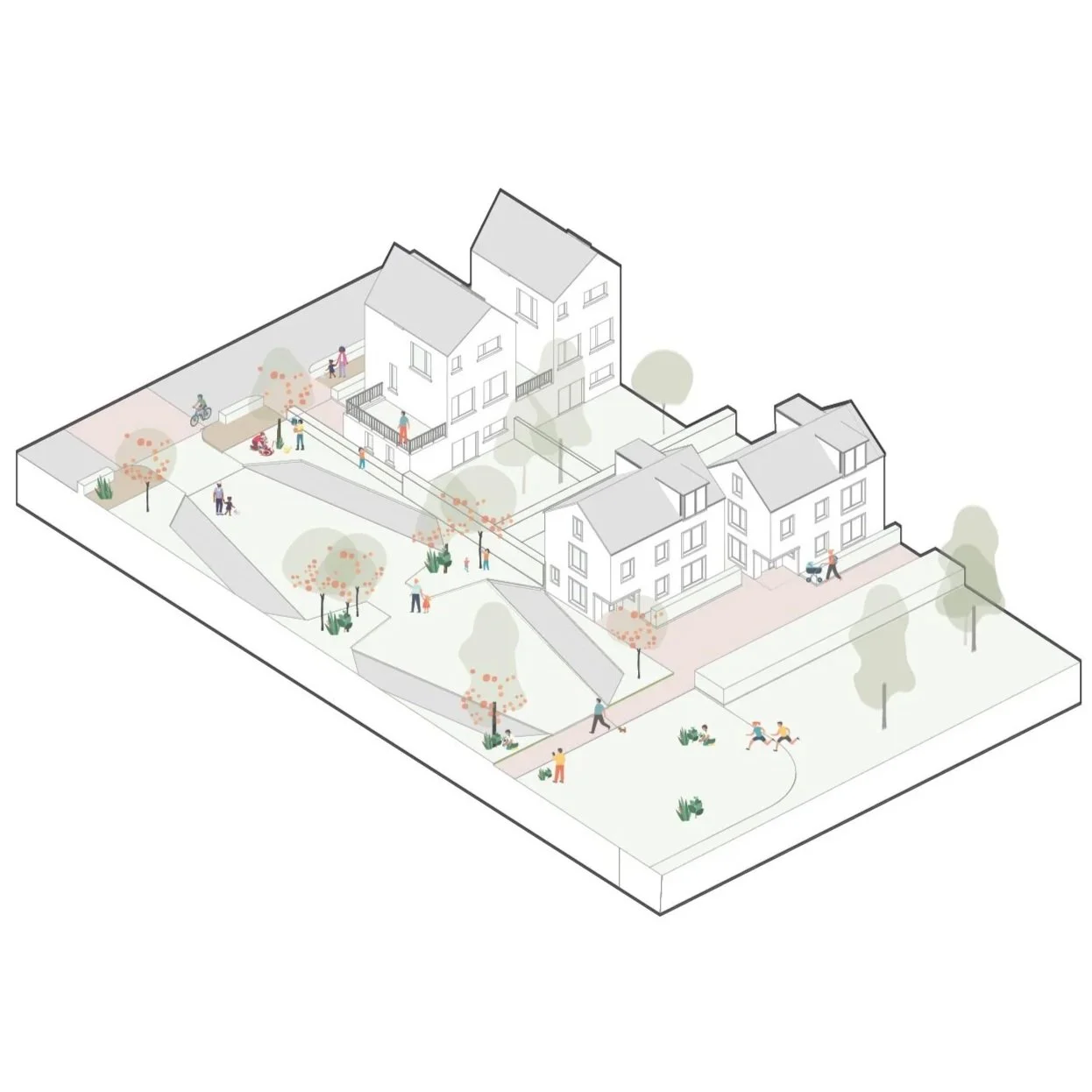
Edible Streets with fruit trees

The project vision illustrates how early-stage, analytically rigorous masterplanning can de-risk complex sites, enhance planning outcomes and create distinctive, market-facing residential places.